Pressure
Why do bubbles change size?
Explore how pressure increases with depth and compresses trapped gas. The drawing compares equal amounts of gas at different pressures.
 DIAMOND COVESCUBA
HANDS-ON STEM FOR SCHOOLS & HOMESCHOOL GROUPS
Science you can dive into.
Turn curiosity into discovery with hands-on STEM lessons and optional small-group scuba experiences for middle schools, high schools, and homeschool families in Arkadelphia, Hot Springs, and surrounding communities.
Plan Your Group’s STEM ExperienceLEARN IT. SEE IT. EXPERIENCE IT.
Classroom activities introduce the ideas. Guided experiences help students connect those ideas to the world beneath the surface.
Pressure
Explore how pressure increases with depth and compresses trapped gas. The drawing compares equal amounts of gas at different pressures.
Density
Compare mass and volume, then explore how an object’s average density relates to the water around it. Dots represent equal units of mass.
Refraction
Follow a light ray from air into water and see it bend toward the normal. Connect the lesson to how objects appear through a dive mask.
Sound waves
Explore compressions, rarefactions, and vibrations. Learn why underwater sound travels differently and can be difficult to locate.
Concept diagrams are simplified and not to scale.
FROM CLASSROOM TO POOL
Students can have the opportunity to try scuba in small, closely supervised pool groups—applying lessons about buoyancy, pressure, underwater light and sound, and movement in water firsthand.
Scuba participation is optional. Students who do not scuba can still take part in classroom science activities and explore Arkansas freshwater environments.
Dates and pricing coming soon. Pool arrangements and program details are being finalized.
Tell us your students’ ages, group size, preferred dates, and whether you are interested in classroom activities, the optional pool experience, or both.
Pool participation is subject to age, medical, and program requirements. This introductory experience does not provide scuba certification.
REAL-WORLD CONNECTIONS
Trapped gas compresses as pressure increases.
Student activity: Predict how a bubble’s volume changes with depth.
Mass and volume help determine whether something floats or sinks.
Student activity: Calculate density, then test predictions in water.
Light changes direction between water, mask glass, and air.
Student activity: Observe how an object’s apparent position changes.
Sound travels faster in water than in air.
Student activity: Compare travel times over the same distance.
Breathing gases are mixtures described using percentages.
Student activity: Calculate the amounts of oxygen and nitrogen in a sample.
Divers track depth, time, and changes in cylinder pressure.
Student activity: Calculate an average rate from sample dive data.
Temperature, light, and depth affect aquatic habitats.
Student activity: Graph temperature readings and compare observations.
Calculations use sample data for classroom learning. Dive planning and in-water activities require appropriate instruction and supervision.
FROM A QUESTION TO A DISCOVERY
Bring underwater science into a science class, math lesson, STEM club, homeschool co-op, or enrichment day. We can discuss activities around your students’ grade level and the topics you are teaching.
Middle school
Connect ratios, measurement, and physical science to the underwater world. Students make predictions, test ideas, and explain what the results show.
High school
Use sample dive data to connect algebra, physics, and environmental science with practical questions divers encounter.
These are examples to help plan your group’s session. Contact Mike to discuss the learning goals, format, available facilities, and activities that fit your students.
Plan a School or Co-op SessionTEACHERS, CLUBS & CO-OPS
Ask about a classroom STEM presentation, lessons paired with an optional Try Scuba pool experience, or an after-school program by arrangement. High school groups can also explore freshwater ecology and careers involving underwater science and technology.
Tell us your grade level and learning goals so we can discuss suitable activities. Dates, pricing, and arrangements are confirmed before booking. Scuba certification is a separate training pathway.
Plan a School STEM ExperienceHOMESCHOOL FAMILIES & CO-OPS
Let’s talk about an Underwater Explorers experience for your group.
LOOK CLOSER
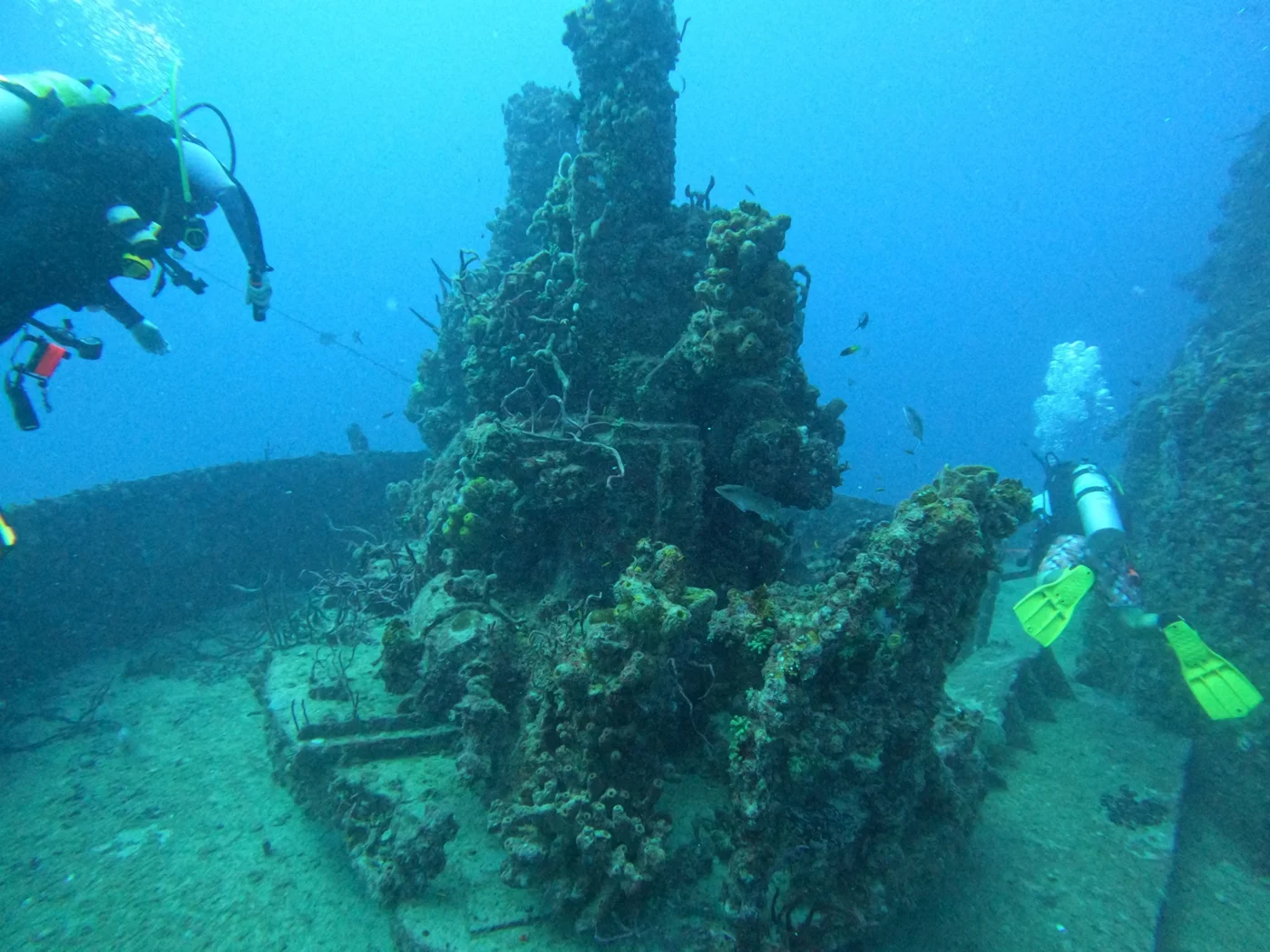
What living things can students spot? Discuss how submerged surfaces provide places for organisms to attach and shelter, then compare this ocean example with freshwater habitats in Arkansas.
YOUR GROUP. YOUR LOCATION.
Ask about mobile scuba instruction, group refreshers, pool experiences, and hands-on STEM workshops. Travel and suitable facilities are arranged before booking.
Explore Mobile Programs